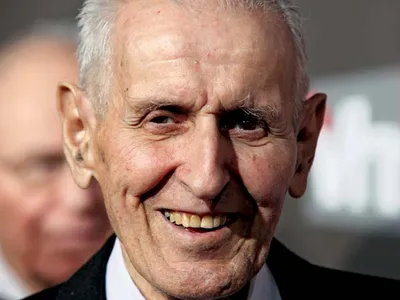
On this day in 1990, “Dr. Death” assisted his first patient in committing suicide. Murad Jacob Kevorkian, professionally known as Jack Kevorkian, was an American pathologist and euthanasia proponent. He publicly championed a terminal patient’s right to die via physician-assisted suicide, a philosophy embodied in his famous quote, “Dying is not a crime.” Kevorkian stated that he assisted approximately 130 patients to that end before his ultimate conviction.
This controversial doctor was tried four times for assisting suicides between 1994 and 1997, being acquitted the first three times, with the fourth ending in a mistrial. In 1998, he was arrested for the voluntary euthanasia of Thomas Youk, a man suffering from Lou Gehrig’s disease (ALS). Kevorkian was subsequently convicted of second-degree murder and served eight years of a 10-to-20-year prison sentence. He was released on parole on June 1, 2007, on the condition that he would not offer advice about, participate in, or be present at any type of euthanasia, nor promote the procedure of assisted suicide.
On this day, he assisted Janet Adkins, a 54-year-old Oregon woman diagnosed with Alzheimer’s disease, marking his first public step into legal and ethical controversy. Adkins sought out Kevorkian after reading about his homemade “suicide machine,” which he called the Thanatron (Greek for “instrument of death”). Because Kevorkian had lost his medical license and had no access to standard hospital equipment or pharmaceuticals, the procedure took place in the back of his rusty 1968 Volkswagen van in a Michigan park. He hooked Adkins to an IV line containing a harmless saline solution, and she pressed a button that switched the fluid to thiopental to induce a coma, followed by potassium chloride to stop her heart. Kevorkian later explained that he chose to assist Adkins because she was facing a progressive, degenerative disease that would inevitably strip away her mind and dignity, and she wanted to end her life while she was still capable of making the conscious choice to do so.
By stepping into the back of that van, Adkins and Kevorkian did more than any single action to make assisted suicide a premier hot-button issue in the United States. Kevorkian’s actions forced the medical establishment, lawmakers, and the public to confront a deeply uncomfortable reality: the fine line between relieving terminal suffering and taking a human life. While he spent his final years silenced by parole restrictions until his death in 2011, the debate he ignited continues to evolve globally as more jurisdictions legalize right-to-die initiatives.
Was it murder or mercy?
Leave a Reply